Shipping is usually the second-biggest cost line in an Australian Shopify store after the product itself, and most of it is avoidable. Below are nine concrete levers to reduce shipping costs, from how you measure parcels to how you charge customers at checkout. None of them require switching carriers blindly or eating the cost yourself.
1. Understand cubic vs dead weight, then design to your carrier's factor
Carriers charge you on whichever is greater: the actual (dead) weight or the cubic weight of the parcel. Cubic weight punishes big, light parcels: a doona in a huge box costs more to send than its kilos suggest. The standard Australian domestic conversion is commonly 250 kg per cubic metre (volume in m³ × 250, or cm³ ÷ 4000). Confirm your carrier's current figure. If you do not know which one you are being billed on for each line, you are guessing. We cover the maths in full in cubic weight explained.
2. Use satchels and flat-rate where they beat cubic
Flat-rate satchels ignore cubic weight up to a stated limit, which makes them excellent for dense, awkward, or just-over-the-line items. A 5 kg satchel can be far cheaper than a parcel service for the same goods. The trick is knowing the break-even point: below a certain weight or size, a parcel rate wins; above it, the satchel does. Map your top 20 SKUs against both and you will spot the obvious switches quickly.
3. Right-size packaging and cut void fill
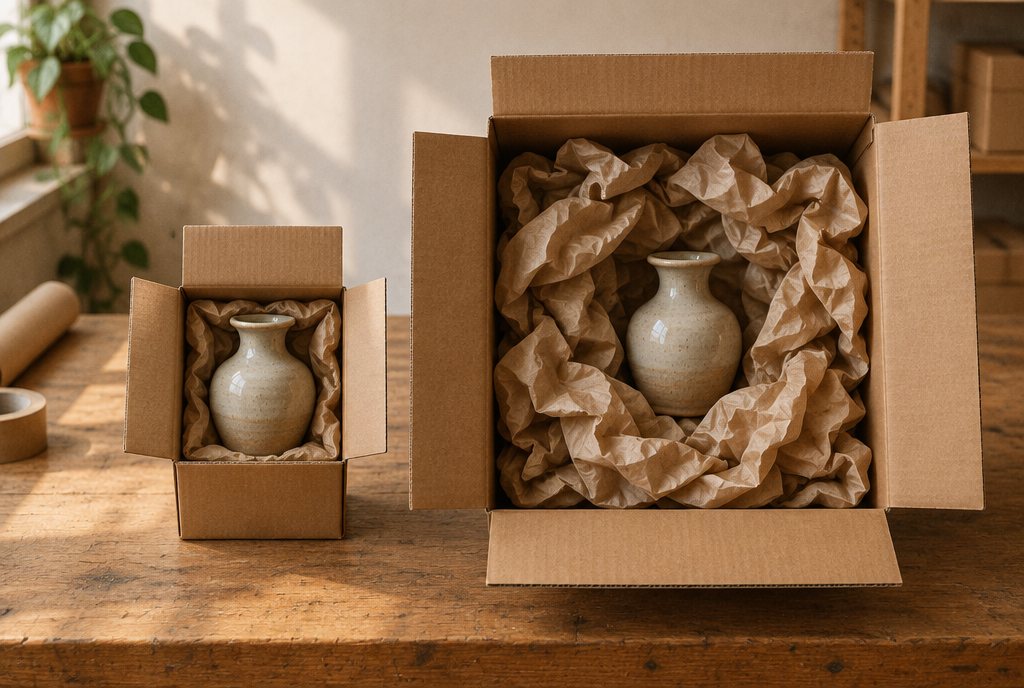
Every centimetre of empty box is cubic weight you are paying to ship. Carrying three or four carton sizes instead of one or two lets packers pick a box that actually fits the order, which shrinks cubic weight and the amount of bubble wrap or paper you stuff in to stop things rattling. Void fill is not free either: it costs labour and materials on top of the freight. Smaller boxes also lower the odds of crush damage, which feeds back into fewer returns (see lever 8).
4. Mix carriers and quote live per order
No single carrier is cheapest for every parcel to every postcode. Australia Post often wins on light items and remote delivery; a parcel carrier like StarTrack can win on heavier metro freight. If you only ever lodge with one, you are leaving money on the table for the parcels it is bad at. The way to capture this is to quote the actual services available for that exact parcel and destination, then pick the cheapest valid one. Our comparison of AusPost vs StarTrack walks through where each tends to win.
5. Negotiate your own account rates and consolidate volume
Retail or off-the-shelf rates are the most expensive way to ship. Once you are doing meaningful volume, open a business account and negotiate. Carriers price on volume and lane mix, so consolidating your sends with one or two carriers (rather than spreading thinly) strengthens your hand at the next review. Bring your actual numbers: parcels per week, average weight, top destinations. Reps respond to data, not vibes. And revisit it yearly: your volume grew, your rate card should too.
6. Use authority-to-leave where it suits
Signature-on-delivery and the redeliveries that follow a missed signature add cost and delay. For lower-value, non-fragile goods, offering authority-to-leave (ATL) as the default removes the signature surcharge and avoids the redelivery cycle when nobody is home. Keep signature for high-value or easily-stolen items, and be clear at checkout about what ATL means so customers can opt out. It is a small per-parcel saving that compounds fast at volume.
7. Set realistic delivery options and charge shipping smartly
Shipping cost is not only what you pay the carrier. It is also what you recover at checkout. A few patterns that work:
- Free-shipping thresholds nudge basket size up while covering your freight, but set the threshold above your true delivered cost on a typical order, not below it.
- Flat rates are simple for customers and protect you on heavy items, as long as the flat number reflects your real average.
- Offer a standard and an express option rather than defaulting everyone to fast, expensive shipping. Most customers pick standard if it is honest about timing.
The goal is to stop subsidising shipping you did not need to, without scaring buyers off at the last step.
8. Cut mis-ships and returns
Every wrong item shipped costs you twice: the freight out, then the freight back plus the reship. Returns carry the same double-freight hit. Tightening pick-pack accuracy is one of the highest-leverage freight savings most stores ignore because the cost hides in customer-service tickets rather than the shipping invoice. Pair that with a sensible returns process so the returns you do get are cheap to handle and quick to restock.
9. Batch and hit lodgement cut-offs to avoid express upgrades
Missing the daily lodgement cut-off pushes a parcel a day later, and the usual fix is upgrading to express to keep the customer's promised date, which costs you the difference. Batch your picking and packing so the day's orders are manifested and lodged before the cut-off, every day. Knowing your AusPost cut-off times (and your other carriers') turns a recurring express premium into a non-event. Cut-offs vary by lodgement point and service, so confirm yours rather than assuming.
A worked example: where cubic bites
Two parcels, same 2 kg of actual goods, different boxes. Using a 250 kg/m³ factor (cm³ ÷ 4000), here is what the carrier bills on:
| Parcel | Box size (cm) | Dead weight | Cubic weight | Charged on |
|---|---|---|---|---|
| Right-sized | 30 × 25 × 15 | 2.0 kg | 2.8 kg | 2.8 kg |
| Oversized + void fill | 45 × 40 × 30 | 2.0 kg | 13.5 kg | 13.5 kg |
That single packaging decision can be the difference between profit and loss on a low-margin order.
The honest takeaway
You do not need new software to do most of this: right-sizing boxes, negotiating your account, and hitting cut-offs are habits, not features. The one piece that is genuinely fiddly by hand is quoting every carrier live per parcel so the cheapest valid service is obvious at pack time, which is something OrderOps does on your own carrier accounts. Start with the levers that cost nothing first; the savings there usually dwarf anything a tool adds on top.